Tuesday, August 28, 2012

Mystic Too

Part 3 (this "second section" posted) has always been the spoiler, the faulty part that made this a "work in progress" for more than 40 years. No matter what I tried or how roughly I revised, it always came out, well. just silly. But two weeks ago, I realized that a second character might be the answer... Now, thanks to James (below), this suite of poems may have a reason to exist.

3. Shucks

Black and white, their brassy bells clanking,
Bulgey udders swoggling side to side,
The Holstein cows amble—slowly—home,
To the saggy, weather-gray lean-to,
More shed than barn, but like a tall church
To me and James, with scattered fodder
From the roof-long hayloft and feed-trough
Altar, and the brimming silage bin
Between. We add to it every day,
Tossing down hard cobs and dried seed-corn,
Rustling shucks that feed the farm critters:
Red corn, yellow corn, more corn. James is
Darker than me, and funny; he sings
To cows, and hogs we slop (also me):
“Hey, sugar babe, what’s your wagon for?
You done broke down, git on out the door,”
And “Hen chickens roost behind the sun,
How you gone to see a day’s work done?”

Then he grabs a cow’s teat, squirts me good,
Ducks away. (James is nine like me, but
I swear he’s crazy.) So when I kneel
To milk his cow, of course I get tail-
Swished and kick-bucketed. I practice
On old Bessie--squeezing gently; no
Yanking--but she's still a miracle
I cannot grasp. The Baptist preacher
Two blocks over may holler and pull
And push, but his white church is no more
Cool or peaceful, and just as empty
Noontimes. James would soar from that steeple--
If they let him be--a pilot like
His uncle, Will, who fought in the War.

I guess Will got himself a red scarf
For missions he flew, and he cut off
A piece James carries for luck. Pine-wood
Joins and notched supports and the sagging
Beams carry us up and up, as high
As we dare climb, to a paradise
Of air and light, and gravity as
We choose--sunbeams spilling through the roof,
James’ dreams of flight sprawled across the loft,
But each in its own space: his flour-
Sack cape, his rickety handmade kite,
Two airplane pictures torn from somewhere.

Up there, James soars; he makes up stories
Of "Will at War." He can leap out far
And still land in silage, or fall free
Into soft hay. He can even crash
Straight down to Georgia earth. Me too, when
I dare; he’s made me his co-pilot.
(I said he was crazy, didn’t I?)

Tuesday, I don’t know why, I said, “Hey,
James, is that red cloth a nigra thing
Or what?” He looked at me once, then looked
Away. We walked the cows in, moving
Apart. No songs. It was the loudest
Silence that I’ll never hear again…

Listening in church now, I hear James
High up in the loft, singing each hymn
Out loud, the colored windows open
Wide to fight the heat down here. He'll be
Thinking, “I don’t feel at home in this
World any more,” and wishing he could
Fly away… Oh, it’s hell-fire next time--
So the preacher says. But if we hold
To what’s unchanging, we’ll be borne on
Angels' wings, dwelling in Beulah Land...

This I know: the rock I stand on now
Is sinking shucks and chickenfeed and
Old ways as broken as the cowshed.


* * * * *
Parts 4 and 5 are ready to post and will appear in fewer days. (Hmm... should that be interpreted as threat, or promise?)

Tuesday, August 21, 2012

Suite Mystic

My excuses for being over a week late are true but boring, so let's just get to it... with "it" being the first third (parts 1 and 2) of this five-part Suite Mystic, devoted to my mother's family past and near present, and to the daily life of white folks and black on the Spivey's Georgia farm--which we visited regularly in the late Forties and early Fifties.

The narrator of these five poems is/is not me. But, for whatever reason, the writer (me, yes) chose to impose partial form on these free verse pieces. Three of them attempt this by requiring a fixed number of syllables in each line, while still giving up traditional rhymes and repeating rhythms; the fourth and fifth take on other forms, even a bit of rhyme. But, standard or free, the five must add up to something worth a reader's investment of time--a small truth, an interesting lie, or something in between...

Suite Mystic

1. Stories

History is lies told by the living
To appease the dead; memories falter,
So flawed tales slip in. My Spivey stories
Lay a-moldering 50 years and more…

Southcentral Georgia after the War—not
The Civil War but World War II, before
America’s true colors appeared, un-
Civilly: Whites and Blacks, Reds and the Blues.
Coming to Mystic as well: three hundred
Souls wilting at a country crossroads--no
Town--a dusty six miles from Ocilla,
With Fitzgerald a good 20 more; but
My mother's home, the family's acres
Of corn and livestock and leaf tobacco.
Last fragment of the Spivey plantation,
Antebellum time of old “Boss Cotton”
And a hundred-odd slaves--house, yard, and fields
Put to the torch in that War between States,
Farm shriveling as Reconstruction failed;
Land whittled down in the Thirties… Now this
Out-of-time retreat to a futile past.

2. Scenes

Languid live-oaks in silhouette. Green-skinned
Elephant’s-ear plants flapping in the breeze.
Scattered pecan shells crackling underfoot.
Off-white columns, their paint cracked, wood mildewed—
Old pillars of the “Big House” that hold up
Nothing now. Yet the pineboard porch and worn-
Down farmhouse lean toward them for support.
Days when I dare to, I can balance, cling
With toe-tips and fingers, lean in, and edge
Slowly around each curving bulk of white
On a half-inch ledge just at porch level.
I wander the musty house and grassless
Yard in my pale bare feet—sweet sensation
For a city boy--and sit on clay dirt
To play Mumbly-Peg, elbow, knee, and toe-
To-toe with colored boys my age, flipping
The sharp penknives they are free to carry.


Sharecropper kids—the sons of black farmers—
And me: from noon on, we chase the sun down
Dirt roads, through dust as soft and slick as silk,
And light like ripe corn. We guzzle ice-cold
Dr. Peppers at the one gas station,
Carefully sliding them out through water-
Chilled metal chambers, the locks and flooded
Ways of that battered pop-bottle canal.
We poke under porch steps, prodding the blue-
Tick hounds that dream live possums moving slow.
And sometimes we light firecrackers, tiny
Dragon-snappers we toss over the nubbed
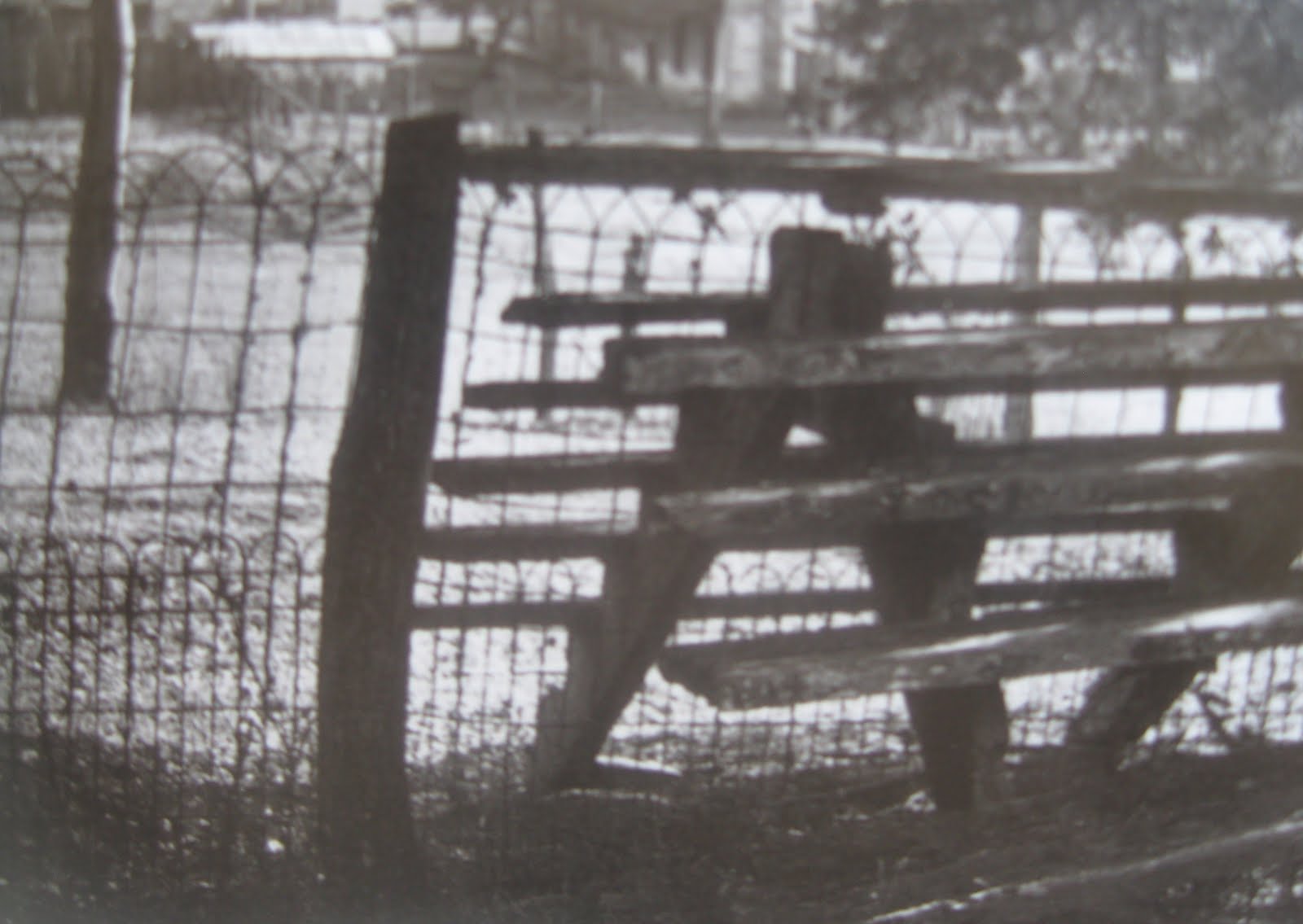
Wire fence of silver arches—exploding
In dust-puffs that rile the cemetary's
Empty silence, hanging in that burst air
Forever…

                 I am eight and colorless.


* * * * *
Part 3, titled "Shucks," will be up in a few days... if I master computer and meds.

Thursday, August 2, 2012

Spivey Brothers, Mothers, and Others

I hosted a party last weekend.

In Hollywood some publicity department might shout: “Eighty years in the tectonic aligning! Fifty years in the imagining! Twenty years in the making!” What it came down to was, I cooked us up some Spivey Brothers Barbecue Sauce, and a bunch of guys came over to try the ribs, chicken, and excellent Louisiana-style hot links, per the smoke-and-red-pepper heat of that long-gone, Shreveport-out-of-Georgia sauce.

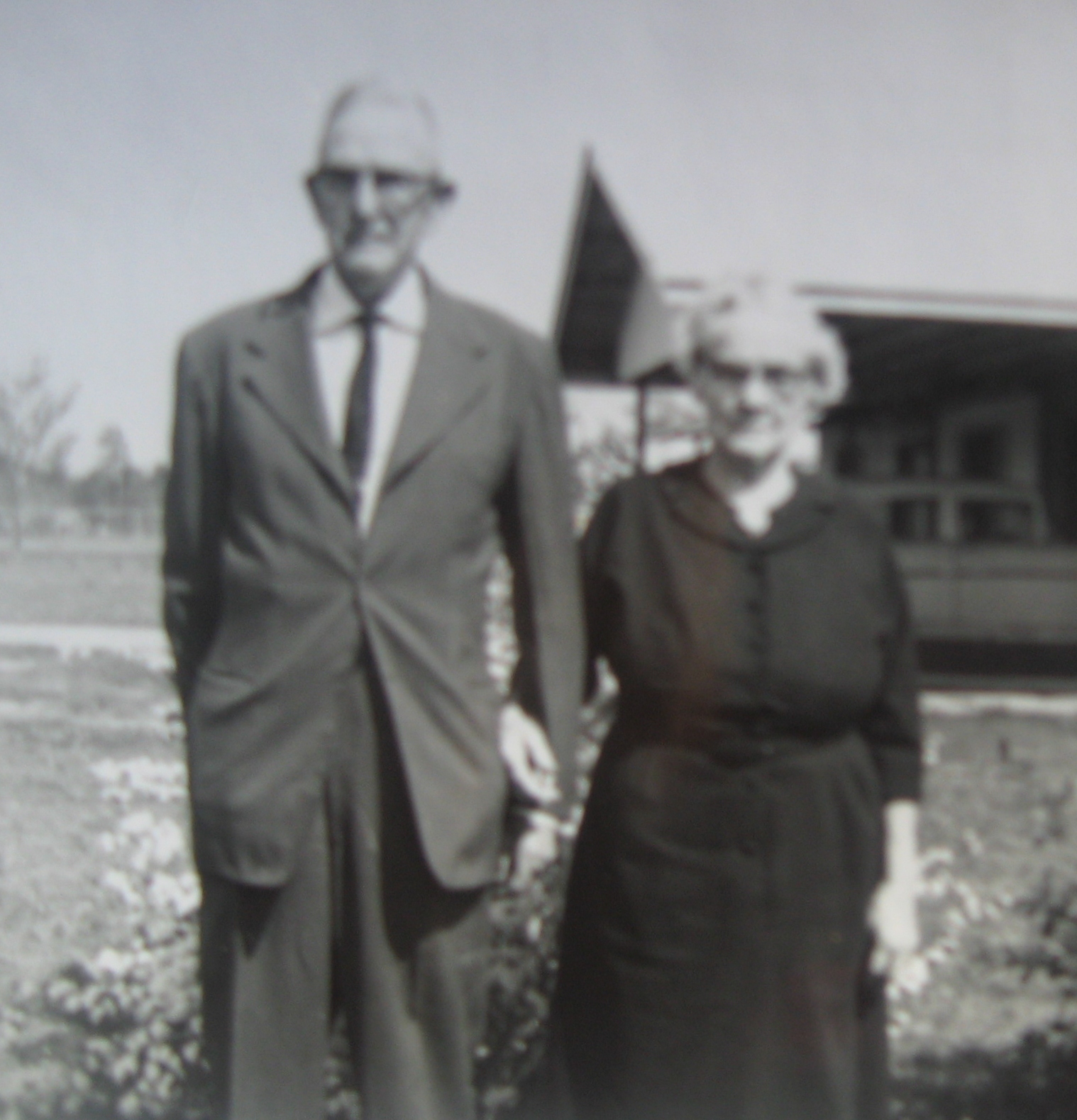
The young woman in the photo--think of her as unannounced muse of the party--is my mother as a spirited teen in the mid-Thirties, youngest of eight children; six sons, that is, plus two daughters. (Good thing for me that much-loved sibling Marjorie Lucile Spivey had no cause to mess with that Mystic, Georgia bridge shown in the background.) And the elderly couple trying out for the sequel to American Gothic are Mom’s looking-too-serious parents, Jesse T. Spivey and Lucile Cook Spivey, photographed in the late-Fifties after they’d
sold the family farm and followed their four surviving sons to Shreveport.

Back in May of 2009, I wrote at length about the brothers’ barbecue sauce business (here), and since then I’ve had emails from a score of SBBS fans, oldsters and youngsters alike, who’d loved it long ago, heard raves about it from relatives, searched all across the South, tried to recreate the unknown recipe, Googled the name (and discovered my blog post), ended up pleading with me to share the sauce’s secrets...

The upshot was that after sitting on the recipe ever since 1993 when Uncle Bobby, next youngest to my mother but nearly 80 by then, chose to pass the charcoal-fired torch on to me… after all those years, I say--I say, son, I say--I decided the time had come to put up (a batch) or shut up (the grill). I searched a dozen dusty bookshelves, found the errant envelope at last, and set to work… “work” in this case meaning
studying the list of ingredients, then enlisting a few grill-enthusiast chums to serve as the brawn--I mean brain--trust for this sensitive project.

Some Spivey family lore may be in order at this point. The two middle sons died early, Charles killed in World War II and stubborn smoker Henry by throat cancer in the early Fifties. He was a bachelor and had his own house near the big farm; his death knocked out a prop the (grand)parents sometimes leaned on, because the other boys had abandoned the fading farm years before that and had made Shreveport their base.

Oldest son “Bubba” was full grown by the time Mom was born, and an elderly man by the time I started paying attention. Next in line was Jack, a
steward on ocean liners, who brought coins, stamps, and other good stuff back from his voyages. (Aunt Hester was married and a resident of Savannah, so not involved.) With Henry and Charles gone, brothers Pat and Bobby became more family oriented and Pat at least more churchified.

Mom always said I looked and acted like Pat--here as the left-handed Huck Finn character busy drowning worms. (Young double “Cousin Eddie” just tried to look swave and deboner.) But I’m aging to resemble my father more and more: bald, shortened, gradually withdrawing.

Deacon Pat also followed another supposed Southern tradition, marrying Charles’ pregnant widow and raising that rowdy new arrival as his own--through hot rods, wild broncs, rodeo days and grass-widow nights--alongside their large brood of kinder-Spiveys.

Bobby must have enjoyed parenting too since he helped produce four more stalwart sons. (One of them, my cousin Joe, is a well-known country music fiddler ranging from Nashville down to Shreveport, from the Grand older Opry to the late-lamented Louisiana
Hayride, those two longtime linchpins of regional Southern radio.)

In earlier days back on their sold-off Mystic farm, the dark and strangely unsettling smokehouse eventually became an important symbol to me. (See the related post coming next time, which will excerpt some bits from my suite of poems about “Mystic.”) But to the brothers I expect it was just a training stop on their way to the barbecue pit in Shreveport and the unexpected success of their “old family recipe” sauce.

Granny and Granddaddy were gone, and then Bubba too, by the time the business went deep South, and the Kraft Corp. stepped in, buying the Spivey recipes, any established good will, and an enforced silence... then craftily created the corpse,
killing the barbecue sauce along with the rest of the Spivey Brothers line.

Well, the gallon-and-some of sauce that I cooked up the other day did at first seem a mite heavy on the vinegar and mustard. But after several tastes, the brain trust and I decided to add more water and let the concoction simmer a while longer. And did those few ounces and minutes make a difference? All I’ll say is that the restless attendees were suddenly voracious, slathering sauce over links, ribs, breasts, hands, faces, and luckless shirts. Whether by fingertip, spoonful, or pint jar, the sauce was consumed.

As a result I'm thinking of producing a limited number of special t-shirts--a gift to participants but inexpensively available to Spivey Brothers devotees as well. It’s an all-type shirt so far, maybe with messy barbecue stains included. The front might read thus: “I GOT SAUCED AT THE SPIVEY BROS. BARBECUE REVIVAL, JULY 28, 2012.” And on the back: “If I told you the recipe, I’d have to kill your appetite.”

A better message (okay, funnier) may pop up, but meanwhile I do have some words for the SBBS fans… Forget the sauce version we made. I’m just not the one to consult for the recipe or the list of basic ingredients. As I indicated earlier in this piece, it’s really not my place or my decision to make. I’m a distant quasi-Spivey, yes, but the Shreveport area is chockablock with direct descendants of the four brothers.

Go talk to one of my cousins, will ya, please?

Oh, and the dog? Shoot, every Southern barbecue needs a steamy, edge-of-the-
bayou shack with some ol' houn'dog sleepin' under the porch. You could thumb through Miz Welty, or Faulkner... Penn Warren, O'Connor, Styron, Percy, and all them other storymakers. (Hunh! Gossip-spreaders more like, ever' one of 'em. And that's all!)

Sunday, July 22, 2012

Thailander

Thailand’s Highlands? No… neither the rugged hill vantages of the Hmong or the Karen, nor the borders-encompassing danger zone known as the Golden Triangle. But listen, my children, and you shall hear instead of the midnight ride of… well, maybe I should set the scene a bit first:

In May of 1986, early on the around-the-world journey that took me to Fiji and Burma and back to Turkey and Europe, I was traveling through parts of Thailand, riding on one of the remarkable long-distance “night buses” that carry folks up, down, and across the Kingdom, from Koh Samui in the far South, to Bangkok mid-country, to Chiang Mai in the North.
Packed with cheap tourists and restive Thais, sleepy children and surprising good cheer, these express buses hurtle down the black-as-pitch two-lane roads--head-lit juggernauts scattering produce and pedestrians, leaving small cars and big distances in their wake, stopping only when the driver needs to relieve himself--or a serious roadblock interferes...

So we're barreling along, blasting down the night, when suddenly the driver stomps
on the brakes, and we rock and shudder to a stop, some ways short of a makeshift barrier. (Later I realize that he was leaving room to maneuver--meaning: attempt to escape.)

And then we wait... nervously... because the roadblock may be manned by bandits, or rebels--or the Thai Army looking to capture bandits or rebels. Though the driver tells us later that there were bandits on this same stretch of road just the night before, we’ve come upon a patrol of soldiers, and in the low-power lights aboard the bus we see they are mostly nervous young conscripts carrying rifles and machine guns. A few Thai men must show their papers, and a couple of hippie tourists have their carry bags inspected.

This was right in the time frame when pot smokers caught on the nearby Malay Peninsula were subject to quick execution. But no illegal substances or suspicious citizens are found in this search, and after some threats and flashlights shown into sleepy eyes, we are told to get on down the road. Our driver knows an exit line when he hears it. He maneuvers around the slight barricade, and on we roll.

Soon he is talking--a Thai man near me translates--mocking the kid soldiers and making us travelers feel less threatened; and about then he reaches up above his view mirror to a small-screen TV set I hadn’t really noticed, turns it on, and shoves in a
VHS or Beta cartridge. (I don’t remember having encountered such an electronic distraction before; I don’t think most airlines--or travel buses--had made the move to multiple or even single viewing screens yet… or maybe, more likely, I was just blithely ignorant.)

Murky darkness on the set and a narrator speaking Thai cause my attention to wander, but loud stadium rock draws me back. “Hunh… sounds a bit like Queen,” I mumble. Then: “What the…?”--we’re witnessing swords brandished in a vast parking garage, and a fight to the (very weird) death--and suddenly it's Scotland
centuries ago: braw laddies, bricht kilties, draid claymores an’ a’. But all this time the characters have been yammering in Thai, with no subtitles in English, French, Scots Gaelic, or otherwise to help make sense of the film’s skittery action.

“Now what… gee, that guy in the fancy clothes looks like… wait, it is, it’s Sean Connery! What in the world is he doing in this sword-totin', time-hoppin' obscurity?”
But enough of the blow-by-blow description. Many moviegoers will know by now that our driver was small-screening a duplicate videotape print (very likely bootlegged) of Highlander, the genre-mixing adventure film fated to become a cult favorite, a “franchise” picture generating four or five sequels. But back then when I quizzed other travelers or native residents from Thailand to Denmark, no one had a clue as to the mystery movie I'd become obsessed with: Ed’s Fantastical Swordfight Feature.

After a while I was starting to believe I’d dreamed it, fitfully asleep after the roadblock. But late that fall, when my future wife and her kids had come over to
spend the winter in Portugal’s English-touristy Algarve region, I noticed a newspaper ad for a movie called Highlander, starring Sean Connery and Christopher Lambert (who?), playing at a nearby theatre--in English, without Portuguese subtitles even.

Whoa back, Buck! The weird night came roaring back: this sounded too similar not to be possible, and too possible not to be viewed, so off we went, driving 20 miles east to Albufeira, stocking up on hot popcorn, and settling into the plush seats. And there it was at last,
Scotland and savagery, Manhattan and MacLeod, the Kurgan and the Quickening--making more sense this time, albeit still the sort of violent flick that guys flock to and gals scoff at (as happened with our foursome that day).

I didn’t care. I was vindicated. If the film later turned out somehow to be more significant than the sum of its crazy parts, well, so be it. Here’s what I mean… some of what I’ve learned since:

Highlander was released in March 1986 in the U.S.--after I’d left the country--and then not until August in Europe; I don’t know the Asian release date but there couldn’t have been legal videocassettes by April. Director Russell
Mulcahy probably wouldn't have cared; he was happy just to move up from MTV vids to a career-making Hollywood feature. Ditto Christopher Lambert who went from brooding unknown to brooding star (for a time and a shot at Tarzan/Lord Greystoke). And Connery? He simply clicked his Spanish bootheels together and jetted, laughing, all the way to the bank and then straight on to his semi-retirement property on Spain’s posh Southeast coast.

A quarter century later, the sequels and TV versions and cult-film write-ups and long-threatened remake of the original... none of them
matter really. I inadvertently saw a stranger version--had it quickened into me, as it were--during an odd, discomfiting night in Thailand, going nowhere fast. And remember…

There can be only one.
* * * * *
(...except when there are four--Spivey Bros. Barbecue Sauce; next time!)

Monday, July 16, 2012

Reconstruction in Glass

Here's the conclusion of the Civil War-related tale introduced last week (in the blog post just below this one):

IV. Contrabands

Now in the scorching late summer, he works among wraiths. When he moves, the humid air clings to his flesh; and when he is still, his spent breath and rivulets of sweat condense on the burned glass plates overhead. He sees coils of shadows drifting within
grays of shifting shades… hears always the clamor of guns and terrible cries of the wounded, the proud insistent voices of freed slaves calling out: “Freedom! Freedom will reign, come heaven or come hell!”

And Jefferson finally shouts, “Let be! Yanks nor Rebs got no truck with me!
‘Federacy make me out a monkey man, say I belong to whoever pay to run me… but the Union come down on Spivey land like Pharoah’s army. Trample my garden! Strip out the smokehouse. Torch the Big House jes’ to hab themselves a cook-up… till nothin’ lef’ but columns an’ the chim’ly.

“I was true free then, me an’ thousands other black folks, could tag on after Sherman man-army. Call us Contrabands ‘cause we could join on in, burn an’ loot some ourselves, tie those Yankee rails into ribbon-bows.

“But I ain’t that--I quit an’ I walk to here. What I want with some dam’ war now?”

V. Dreams

The shadowed, sullen plants rest, listless in the heat. And one night he dreams…

A younger, taller Jefferson walks, alone, through swathes of lobelia and loosestrife and feverfew. He breathes honeysuckle and sweet magnolia. Massive white columns stand blocking the sun, and in their shade the sightless bodies from the glass move as easy as Jacob’s ladder in a breeze--swaying, talking among themselves, their bodies full of light now, wounds radiant, bright as noontime; only their dark-streak faces resist…

The many voices blend one into another, a chorus puzzled, angry, mourning: Where is this? Who am I now? What did we die for? No one remembers. Our graves lie ill-tended. Our only memorials are glass. Discarded.
Forgotten. Sold as scrap. Where we wait now, the sun bleaches out blue, and black, and gray, rain washes our stories away, the years erase all detail, from the imperfect surface of our lives, the fading record of our deaths… in heart’s ease we disappear…


And he wakes to a crisp fall morning.

VI. Clear Glass

Ghosts and memories gone silent, he cuts away dead blossoms, prunes sagging stems, tends the mulch of summer’s end--chopping old beds, turning the composted heap. As he labors row on row, he speaks softly to the stilled growths: “Crop field or
battlefield, garden or grave, what I do here is what you are. Whatsoever get lef’ behind as waste still turn to chalk and good humus.”

He takes a deep breath. Autumn’s rich, ripened smells rise fresh in his nostrils, and he imagines the final breath of every soldier fallen in the War, collecting in drifts of cloud, changed to air again by the Lord’s own greenery. Squinting up at the blurred glass, he lets black loam slip from his fingers. Saying:

“This the light too, the darkes’ part. See, life be only what the light make of it, and every kind of pain melt in the sun. Jefferson Spivey, free man--that’s me. And when I pass, this earth here remember you, your scars and hurt come to clear at last.”

He re-turns the soil.

Fans of Ken Burns' Civil War series may recall a brief sequence near the end when the Narrator mentions glass negatives showing battlefield scenes that were sold as scrap, many of them ending their days as replacement panels in greenhouses—where the sun would burn away the negative images. The story haunted me until I wrote this… fragment of a short story, or prose poem, or historical remembrance. (Next time: an Asian Adventure becomes... Haute Culture?)

Saturday, July 7, 2012

Panels Toward a Reconstruction of Glass

In honor of July 4th and “The Colonel,” my father, USAF officer E.G. Leimbacher—who would have turned 95 yesterday—and another USAF Colonel, our younger son Christopher Michael Wilcox, I offer this fragmentary short story, or prose poem, or historical remembrance, occasioned by a brief passage near the end of Ken Burns’ magnificent work The Civil War. This is the first part of two, and I’ll say more about the source next time.

* * * * *

I. 1872

Late that summer he became aware of shadows, ghostly figures flickering, blotches of black and gray stippling the lilies and hothouse blooms.

The glazier’s man had come, knocked out the cracked greenhouse panels, and replaced them with panes of glass so strangely patterned that Jefferson finally scaled the garden ladder to learn their secrets. The streaks muddling the glass, the marks and
shapes that ruled the humid air below, up close proved translucent: soldiers in uniform, all grays and silvers, their faces the burnt-cork black of minstrelsy. A few stood in formal poses, frozen in a dark time, but more lay sprawled and torn, limbs mangled, the unknown dead on bloody ground, their hollow-eyed skulls staring a thousand years.

It was the War again.

II. Baltimore

A man free and whole, he had walked all the way north from Georgia, shedding each clot of red clay as it dried, clear on to Baltimore… where he just stopped. Saying right out loud to no one: “This’d be far ‘nough.” Thinking: Lord hab mercy, some Union towns look close-on South.

Plain “Jefferson” he’d been until the day in ’64 that Bluebelly sergeant said he’d need a second name to gain a share of forage. So he added “Spivey,” reclaiming the ground that held his people fast for a hundred years.

Thinking: But I was actual born that first day, January 1863, when Mist’ Abraham reckon every one of us, house or field the same, free forever. An’ I know it right then. I could read some an’ shape my slave name letters too. But be free? I dassn’t yet. Bossman dogs speak louder.

III. Seasons

“Our conservatory is rich with promise,” said Mr. Caldwell, “and my wife’s gardens annually blessed with God’s bounty. We cultivate order, Mr. Spivey; we ask that you
help maintain it… A beautiful setting, is it not?”

“Yessuh, it surely is.” But thinking, surprised: It don’t come up to home.

He buried that notion in moist loam, to toil among beech trees and roses, attending each summer’s inclinations and, within the glittering hothouse, shaping off-season riots of color from roiling orchids and flowering japonica. He made each early morning his green-up time—hard at work before the heat inside turned all hellish, and while the light (“my Southun light,” he’d insist with a grin) was all a glory. The glass magnifying yet attenuating, he’d chase that changing light day by day, packing dark soil down to the roots, snipping bits of green shoots and buds, grafting plant upon plant in unusual pairings, growing bulbs and exotics… and older, seven years almost, his life as ordered as the gardens in their cycles.

IV. Contraband

Now in the late, scorching summer, he works among wraiths…

(To be continued)

Saturday, June 23, 2012

The President's Lady

In election season I probably get 10-20 political solicitations a day, most of which are deleted immediately. But once in a while I glance through something from MoveOn, or the President, or a petition forwarded by some friend. Michelle Obama is not only the Mistress of the White House, but a Mistress of Messaging too. (Tea Partyers and racist Repugs, that word has several meanings other than the one making you salivate.)

Some days you just gotta go with the flow. This is what I emailed to Obama headquarters a while ago:

Hello... Whoever.

I realize Mrs. O will never read this, but I just made a small donation, and decided I might also vent a bit. I am one of the many disappointed liberal/progressive/very-anti-corporate, displeased-with-Demos-too worker bees who fill this land of the fraud, home of the brazen chicaners and banksters. I wouldn’t vote for a Righty Repugnant if I were on fire and he was right (of course!) there holding a bucket of water in one hand and a fire-retardant blanket in the other!

Yet of course I am exaggerating. There have been many decent members of the GOP in the past, those fiscally conservative, Midwest-styled Moderate men and women who are so sorely lacking today—the House full of trash and the Senate full of aristocratic refuse(rs). So we elected a fine man, a prof and orator who sort of rose from the streets... but who turned out to be badly advised (by old boy insiders who should have been ostracized), or ineffectual, or too aloof from the fray for too long. Yes, the President has been trapped by economic Fate, battered and obstructed and subjected to racist vilification. But he hasn’t really fought back either; he seems intent on just holding the moral high ground and keeping the dirt off his hands and still-buttoned shirt sleeves.

You of the campaign, using the First Lady again, mailed out a splendid family photo along with the usual plea for support. This note (plus donation made) is in answer to the long letter and photo caption ostensibly written by Mrs. Obama. She makes reference to the magic words of campaigns everywhere: “real and lasting change.” A year into the first term I too pondered that phrase, and I dreamed up a nice-looking t-shirt that I gave to friends and strangers alike; it showed a giant buffalo nickel encircled by these words: “I voted for real change, not nickel-and-diming.”

And here are a couple of excerpts from the credo statement I wrote to hand out with the t-shirt; sadly they’re still pertinent today:

“...We’re trapped in this Grim Regression, praying for a Progressive President to arise—not retreat or appease—an F.D.R. full of stubborn spirit, a leader burning with the fire of M.L.K. and the hard grit of L.B.J., active and involved rather than aloof and above the fray, a scrapper who’ll kick ass, not kiss it, who’ll chop the neo-cons and turncoat ’dogs and conman Republican’ts right off at the knees!

“Over the past 30 years, Reaganomics and misbegotten corporation-funded administrations have ruined manufacturing, devastated the unions, outsourced the nation, and decimated the middle class...

“It’s time. No more pharma liars and Goldman Sachs cheats, feckless conniving Supremos and ‘best Congress money can buy.’

Yes, we backed a brilliant orator who brought us this far, but now we need an arm-twister and angry do-er... an activist President who stands with us and for us!”

I don’t think I’m the only worn-down citizen who feels this, even while continuing to vote Democrat. So please, Mrs. Obama, if you do see this note—on behalf of all us confused and disaffected--give the President a hug and a kiss and, please, a whole lot more gumption.

All best regards, Ed Leimbacher

* * * *
Some reading this may recall that ailing poet Robert Frost tried to read a new poem at Jack Kennedy’s inauguration, but had to settle for reciting his classic “The Gift Outright” instead… which states midway, “Something we were withholding made us weak…” But our embattled President actually reminds me of a different Frost work. If I may wax fanciful, he stands on the verge of the ocean of our nation’s problems, but so far seems unwilling to do more than wade the shallows, “neither out far nor in deep”—when he needs to jump in with both feet and swim hard for the horizon, ignoring sharks and storm-surge and other struggling swimmers, if he really wants to save himself and his beautiful family and the rest of US from drowning.

(Photo copyright Luke Sharrett and The New Yorker.)

Wednesday, June 13, 2012

Gil: Still Cool

Gil Evans, the brilliant, self-effacing, stubbornly dedicated arranger/composer, died in 1988, but admirers of his recordings and students of his amazing re-imaginings of other composers’ work, whether Tchaikovsky’s “Arab Dance” or Parker’s “Donna Lee” for the Claude Thornhill Orchestra; Gershwin’s “Summertime” or Rodrigo’s Concierto de Aranjuez for Miles Davis; Weill’s “Bilbao Song” or the Willie Dixon Blues-assembly known as “Spoonful” (and howled by the Wolf) for Gil’s own bands--or for that matter his famous tunes like “La Nevada,” “Flute Song,” “Hotel Me” (with Miles), “Zee Zee,” “Las Vegas Tango”—marked the Evans Centennial on May 12th of this year. And they… I should say we, because I am one and we are many… we have great cause for celebration.

One of our number, a young composer named Ryan Truesdell, protégé of composer/bandleaders Bob Brookmeyer and Maria Schneider and sometime Jazz musician, was curious about one long-lost work of Gil’s, inquired about it to the Evans family, was given access to great heaps of paper (scattered across the U.S.) representing Evans’ accumulated life’s work, and gradually found a treasure trove of unknown arrangements, some never used, others played but unrecorded and forgotten, from the five decades of Gil’s life in Jazz.

Ryan searched for all the elements for 15 or 20 of the more intriguing, found nearly every chart for those arrangements, and then applied to the ArtistShare program, which helps musicians raise the money for projects adjudged worthwhile, and which also provides a shared-ownership record label to present the results. But most of the production money comes from fans of each artist, who are invited to “participate” at contribution levels ranging from the price of a single CD up to several thousand dollars. (More about that below.) Among previous ArtistShare successes are award-winning albums by Maria Schneider, Jim Hall, Bob Brookmeyer, Pat Metheny, the Clayton Brothers, and other less familiar names.

With this Evans hundredth-year project, simply titled Centennial, the combination of splendid subject, important discoveries, applicant’s proven experience (and connections), and willingness of Evans fans to cough up some serious money carried the day; and so last fall Truesdell assembled a modern Evans-styled orchestra made up of New York’s top Jazz band musicians (including a few who had played for Gil), and they recorded ten of the best or most interesting arrangements, with pride of place, the opening track on the terrific resulting album, given over to “Punjab”--the missing tune that began Ryan’s unplanned quest--revealed as quintessential Sixties Gil, a wandering and wailing (piano and alto sax, respectively), 14-minute, tabla-driven journey, past Bangalore and the Hindu Kush to regions unknown… or, if I exaggerate, just think of an open window with a view of the richly exotic East, and then look beyond. (That tabla, by the way, was Truesdell’s own shrewd addition to the Evans arrangement.)

Complexity and a sheath of eerie dissonance mark Gil’s revision and extension of Kurt Weill’s “Barbara Song,” the ten-minute earlier version of which had appeared on the Individualism album. But Gil revisited and re-arranged it for a 1971 Berlin concert of his compositions; allowing for plenty of the Evans-patented, unresolved, hovering chords, the new version also leads to a more driven and insistent second half. Truesdell in turn has allowed the “Orkester Neo-Gil” (I made up the name) to wind and find its own way, like an Evans band of the later Seventies, through colors and silences and drifting solos, and with a vibraharp guiding the arrangement--in place of the original’s startling piano cues and Wayne Shorter’s haunted, lyrical tenor--providing a musical spine that seems to rattle a bit like the skeleton-ribs vibes in some Thirties b&w cartoon. (Anyone confused by that sentence, mea culpa, and be assured that the resulting 12 minutes of “Barbara” may well be the CD’s piece de l’existence.)

There are many other gems here—a beautiful expansion of “The Maids of Cadiz,” once a trim highlight of Miles Ahead; three delicate but craftily constructed vocal tidbits, two meant for Thornhill and the third for Astrid Gilberto years later, plus a peripatetic fourth chart maybe played by both Tommy Dorsey and Les Brown (think of all these as small steps on the path of a scufflin’ arranger); a three-tune Evans medley, a melange of meandering melodies meant to nudge his players into leading from within; plus the late-evening chart that Brookmeyer remembered playing during his brief time with Thornhill's band, and that he recommended Ryan track down as well. (It was “How About You.”)

All the tracks merit further attention, but I want to discuss participating in ArtistShare instead… because I did.

I had purchased direct from the organization some excellent CDs by Schneider and Hall, so I received email notice of the Evans/Truesdell project, with an invitation to help make it happen. “Wow,” I thought. “…If I only had the money.” As the saying goes, Be careful what you wish for…

A day or two later, I heard from my friend Ken Wiley, radio station KPLU’s Sunday afternoon deejay, playing the whole history of Jazz for 30-plus years now. Ken wanted me to help him sell some duplicate Mosaic-label box sets on eBay. (He proudly owns no computer.) I’d have done it as a favor, but he insisted on splitting the money on any sales made. Long story short, the collectors were buying; Ken made out like a band leader, and I fell into a first chair spot. Suddenly I had some discretionary money. I hemmed and hawed and then went ahead, sending the cash for a Bronze-level participation.

Each project sets its own definitions for rewards and, I suppose, light responsibilities—for example, buttonholing other fans to contribute or to join. The Evans project so far has posted well over a hundred videos, downloads, interviews, caches of session photos, rough mixes, reports from Ryan, and more—all available to participants only (but that includes single CD buyers too). Each of us also received a Signed copy of the Evans biography by Stephanie Stein Crease, and one or two peripheral notices from Ryan. Also per the system, the big-bucks Silver or Gold-level participants might be invited to recording sessions or club dates; and all of the "metal" bearers have their names listed prominently on the elaborate double-fold digipak (which also comes with separate burnt-umber booklets housing Ryan’s informative liner notes and session-musician photos). Altogether, First Class treatment and a First Rate experience… and with Gil Evans involved, one can claim to be contributing, however slightly, to the serious History of Jazz.

Meanwhile the Centennial disc keeps spinning and gleaming. Chords hover and solos turn sharply. Trombones bark and trumpets sound, saxes swirl and woodwinds moan. There’s tuba and tabla, bass clarinet and clarion bass, horns a-French and flutes afloat, oboes ever and—oh, man—all over his drum kit, the great Lewis Nash. Ryan conducts with assurance, Frank Kimbrough channels Gil at the piano, altoist Steve Wilson hard-charges inside and out-... and together they transport the band from the lost history behind to the Free Territory ahead.

Spread the word, shout it out, write it on the walls:

Evans Unearthed… Gil Lives.